
"20th century coffee"
800 article(s) found

The origin and planting environment of the rare Guadeloupe coffee beans
Professional coffee knowledge exchange more information about coffee beans please follow the coffee workshop (Wechat official account cafe_style) this archipelago in the Caribbean used to be an important producer of coffee. Good coffee production was affected by natural disasters. In 1789, more than 1 million coffee trees on 500 hectares of land produced 4000 tons. Today, only 150 hectares of land is used to grow coffee.
Kenyan coffee boutique coffee delicious African coffee
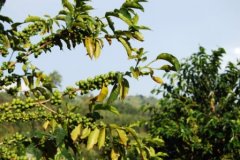
Coffee entered Kenya in the 19th century, when Ethiopian coffee drinks were imported into Kenya through southern Yemen. But it was not until the early 20th century that the Bourbon Coffee Tree was created by the St. Austen Mission (St). AustinMission) is introduced. Kenyan coffee is mostly grown at an altitude of 1500 to 2100 meters and is harvested twice a year. To ensure that only ripe berries are picked, people must be in the forest

The Social Evolution of Coffee roasting: renewed attention to quality
All in all, let's look back at the social evolution of coffee roasting and then see the amazing evolution of the twentieth century. Although pre-baked coffee beans / pre-ground coffee powder marketed by brands were very popular in industrialized European and American countries in the first half of the 20th century, the tradition of fresh baking at home persisted. In southern Europe, until 1960.

Characteristics of Kenyan Coffee beans Fine Coffee
Coffee entered Kenya in the 19th century, when Ethiopian coffee drinks were imported into Kenya through southern Yemen. But it was not until the early 20th century that the Bourbon Coffee Tree was created by the St. Austen Mission (St). AustinMission) is introduced. Kenyan coffee is mostly grown at an altitude of 1500 to 2100 meters and is harvested twice a year. To ensure that only ripe berries are picked, people must be in the forest

Characteristics of Kenyan Coffee beans Fine Coffee
Coffee entered Kenya in the 19th century, when Ethiopian coffee drinks were imported into Kenya through southern Yemen. But it was not until the early 20th century that the Bourbon Coffee Tree was created by the St. Austen Mission (St). AustinMission) is introduced. Kenyan coffee is mostly grown at an altitude of 1500 to 2100 meters and is harvested twice a year. To ensure that only ripe berries are picked, people must be in the forest

Characteristics of Kenyan Coffee beans Fine Coffee
Coffee entered Kenya in the 19th century, when Ethiopian coffee drinks were imported into Kenya through southern Yemen. But it was not until the early 20th century that the Bourbon Coffee Tree was created by the St. Austen Mission (St). AustinMission) is introduced. Kenyan coffee is mostly grown at an altitude of 1500 to 2100 meters and is harvested twice a year. To ensure that only ripe berries are picked, people must be in the forest

The earliest coffee plantation in southeastern Cuba introduces crystal coffee.
The earliest archaeological landscape of coffee plantations in southeastern Cuba, located in the Maestra Mountains in southeastern Cuba, was a coffee-growing area in southeastern Cuba in the 19th and early 20th centuries. Mount Maestra averages 1500 meters above sea level, straddling Guantanamo and San Diego

Kenya coffee with fruit flavor, rich taste and perfect introduction to boutique coffee
Aromatic, rich, fruity, rich and perfect on the palate. Kenya coffee has a wonderful fruity flavor, with a blackberry and grapefruit flavor, is a favorite of many coffee lovers. This coffee has an excellent medium purity, crisp and refreshing taste. Fresh flavor and best for iced coffee in summer. When you taste this coffee,

Kenyan coffee taste, origin, status and geographical location
It entered Kenya in the 19th century, when Ethiopian coffee drinks were imported into Kenya through southern Yemen. But it was not until the early 20th century that the bourbon was introduced by the St. Austen Mission (St.AustinMission). Kenyan coffee is mostly grown at an altitude of 1500m, 2100m, and is harvested twice a year. To ensure that only ripe berries are picked, people must be in the forest

The spread of coffee in China and the development of coffee shop culture
The development of coffee in China according to historical records, coffee was first planted in Taiwan in 1884, which opened the prelude to the development of coffee in China. The earliest coffee cultivation in mainland China began in Yunnan, when a French missionary brought the first coffee seedlings to Binchuan County in Yunnan Province at the beginning of the 20th century. For nearly a hundred years after that, coffee was only a star in the vast territory of China.

Kenyan Coffee Flavor introduces Fine Coffee beans
Kenya AA coffee beans are adjacent to Ethiopia, the origin of Arabica coffee trees in the north of Kenya, but it was not until the beginning of the 20th century that they began to engage in coffee cultivation. In the 19th century, missionaries introduced Arabica trees from the leaves, but did not plant them in large quantities. It was not until 1893 that coffee was cultivated on a large scale after the introduction of Brazil's ancient "bourbon" coffee seeds. That is to say,

Espresso knowledge: what's the difference between dry cappuccino and wet cappuccino?
[introduction] Cappuccino at the beginning of the 20th century, the Italian Agatha invented the steam pressure coffee machine, but also developed the cappuccino coffee. Cappuccino is filled with steamed milk on strong coffee. At this time, the color of coffee is like a cappuccino monk covering a dark brown coat with a headscarf, hence the name.

Chateau San Pedro, a coffee-growing area in south-central Puerto Rico.
The national economy of Puerto Rico developed rapidly in the 20th century. Stimulated by the strong support of the government and the expanding demand of the local market, Polish coffee gradually returned to its former elegant demeanor. The Yauco region is internationally renowned for its full Body, creamy and red wine aftertaste and chocolate nut finish. Regional characteristics at higher elevations, slower maturity, surpassing

The origin of Kenyan coffee beans boutique coffee
Coffee entered Kenya in the 19th century, when Ethiopian coffee drinks were imported into Kenya through southern Yemen. But it was not until the early 20th century that the Bourbon Coffee Tree was created by the St. Austen Mission (St). AustinMission) is introduced. Kenyan coffee is mostly grown at an altitude of 1500 to 2100 meters and is harvested twice a year. To ensure that only ripe berries are picked, people must be in the forest

Characteristics of Kenyan coffee beans Kenyan coffee beans
Coffee entered Kenya in the 19th century, when Ethiopian coffee drinks were imported into Kenya through southern Yemen. But it was not until the early 20th century that the Bourbon Coffee Tree was created by the St. Austen Mission (St). AustinMission) is introduced. Kenyan coffee is mostly grown at an altitude of 1500 to 2100 meters and is harvested twice a year. To ensure that only ripe berries are picked, people must be in the forest

Characteristics of Kenyan coffee beans Kenyan coffee beans
Coffee entered Kenya in the 19th century, when Ethiopian coffee drinks were imported into Kenya through southern Yemen. But it was not until the early 20th century that the Bourbon Coffee Tree was created by the St. Austen Mission (St). AustinMission) is introduced. Kenyan coffee is mostly grown at an altitude of 1500 to 2100 meters and is harvested twice a year. To ensure that only ripe berries are picked, people must be in the forest

Introduction of coffee roasting knowledge introduction of coffee bean roasting methods introduction of roaster price
As early as the 13th century, the Arabs invented to put coffee beans in a pot, stir-fry them with fire, grind them into powder, and then brew coffee. The early Arabs liked to bake the beans shallowly and boil them with spices such as cardamom. Later, this coffee stir-frying method spread to Syria, Turkey and Egypt, where it was used to stir-fry the coffee black, then grind it into powder and add it.

Colombian Coffee Bean background Coffee Bean producing area Flavor Hope Manor Award record
Colombian coffee background coffee was introduced into Colombia at the end of the 18th century and was developed for commercial operation in the 20th century. There are more than half a million coffee farms in Colombia (mostly on a small scale). The Andes provide a variety of microclimates that are conducive to the development of boutique coffee, but the terrain also limits the size of the farms. The steep mountain is not good for machine farming.

The present situation of the origin of coffee in Kenya
Kenyan Coffee, the origin editor, entered Kenya in the 19th century, when Ethiopian coffee drinks were imported to Kenya through South Yemen. But it was not until the early 20th century that the bourbon was introduced by the St. Austen Mission (St.AustinMission). Kenyan coffee is mostly grown at an altitude of 1500m, 2100m, and is harvested twice a year. To ensure that only

Coffee blending and roasting methods and formulations introduce the degree of roasting
This kind of roasting is also related to the birthplace of Espresso. Espresso is a coffee extraction method that originated in Italy. At the end of the 19th century and the beginning of the 20th century, that is, when the Espresso extraction method was born, Italy was not a rich country in Europe. Due to its own economic strength, the popular coffee quality in Italy was not good, and most of them drank inferior Robusta coffee.